

MRI Imaging in Colorado Springs
Magnetic Resonance Imaging (MRI) is an advanced diagnostic imaging examination that provides highly detailed images of soft tissues, bones, joints, and the spine. At the CSOG Imaging Center, MRI is used to help diagnose a wide range of orthopaedic conditions, including ligament tears, tendon injuries, cartilage damage, spinal disorders, and sports injuries. Working closely with your orthopaedic provider, our MRI services support accurate diagnoses and personalized treatment planning.
Detailed Imaging
Advanced MRI imaging for precise evaluation.
Expert Team
Experienced radiologic professionals you can trust.
Quick & Efficient
Streamlined process for faster results.
Advanced Imaging for Bones, Joints, Muscles & the Spine
When pain, injury, or limited mobility affects your daily life, understanding the underlying cause is essential for effective treatment. At the CSOG Imaging Center, we provide MRI services to help physicians evaluate a wide variety of musculoskeletal conditions with exceptional detail.
MRI uses powerful magnets and radio waves to produce detailed images of the body's soft tissues and internal structures without ionizing radiation. It is particularly valuable for diagnosing injuries and conditions involving muscles, ligaments, tendons, cartilage, nerves, and the spine that may not be visible on an X-ray.
As part of Colorado Springs Orthopaedic Group, our MRI services support comprehensive orthopaedic care by providing the diagnostic information physicians need to develop personalized treatment plans.
What Is an MRI?
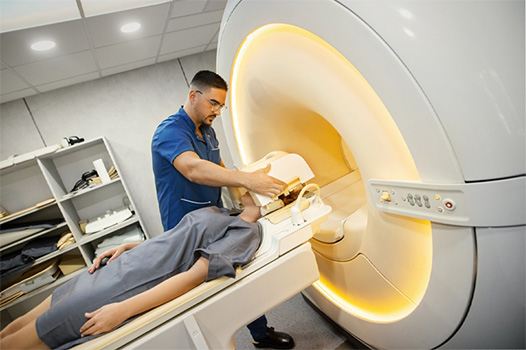
Magnetic Resonance Imaging (MRI) is a non-invasive imaging examination that creates detailed cross-sectional images of the body's internal structures. Unlike X-rays and CT scans, MRI does not use ionizing radiation. Instead, it uses magnetic fields and radio waves to produce highly detailed images.
MRI is especially useful for evaluating soft tissue injuries and conditions affecting the musculoskeletal system. Depending on your symptoms, your physician may recommend an MRI to obtain additional information that cannot be seen with other imaging studies.
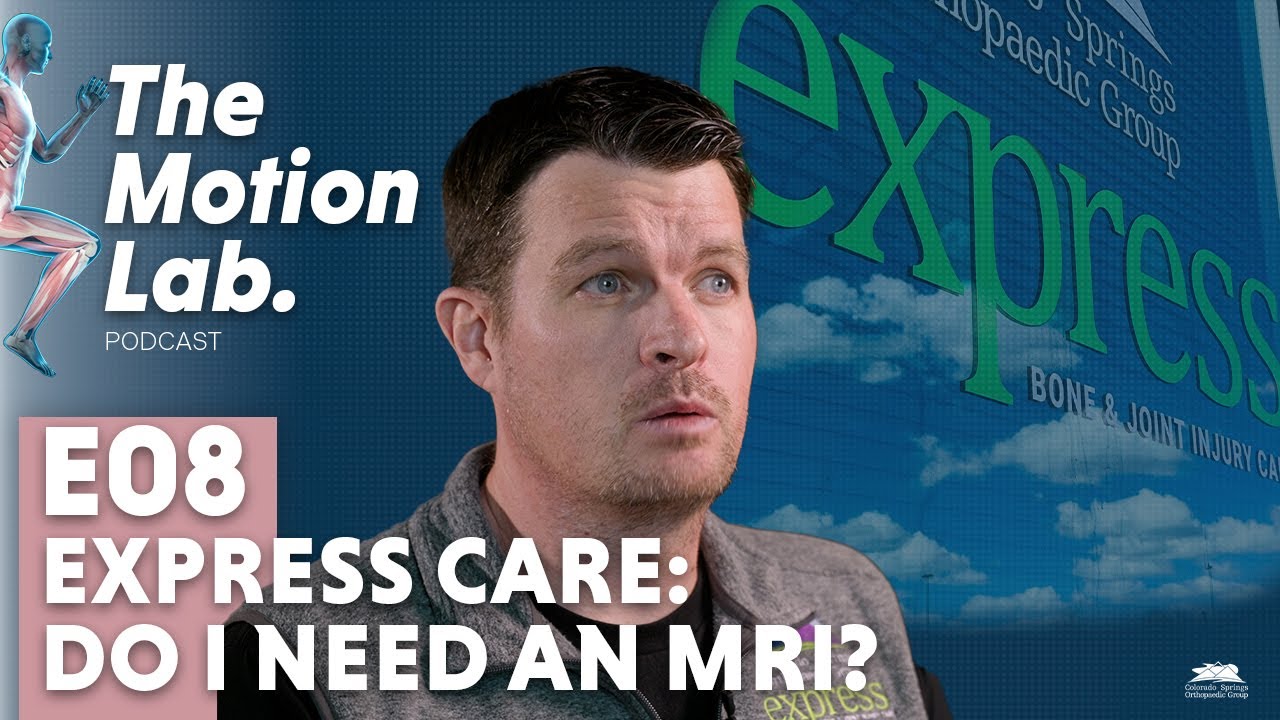
The Motion Lab: Express Care: Do I Need An MRI
Colorado Springs Orthopaedic Group explains how their specialized Express Care Clinic operates and breaks down the decision-making process behind ordering an MRI for orthopedic injuries.
What Can an MRI Diagnose?
MRI is commonly used to evaluate:
- Torn ligaments
- Tendon injuries
- Rotator cuff tears
- Meniscus tears
- Cartilage damage
- Labral tears
- Muscle injuries
- Sports injuries
- Herniated discs
- Spinal stenosis
- Nerve compression
- Joint inflammation
- Bone marrow abnormalities
- Stress injuries
- Soft tissue masses
- Certain fractures not visible on X-ray
When Might You Need an MRI?
Your physician may recommend an MRI if you have:
- Persistent joint pain
- Shoulder pain
- Knee pain
- Hip pain
- Neck pain
- Back pain
- Sports-related injuries
- Joint instability
- Swelling that does not improve
- Suspected ligament or tendon injury
- Numbness or tingling
- Limited range of motion
- Symptoms that continue despite conservative treatment
Conditions Commonly Evaluated with MRI
Sports Injuries: MRI is widely used to assess ligament tears, tendon injuries, cartilage damage, and muscle injuries sustained during athletic activities.
Shoulder Conditions: MRI helps evaluate rotator cuff tears, labral injuries, tendon disorders, bursitis, and shoulder instability.
Knee Conditions: MRI is commonly used to diagnose meniscus tears, ACL injuries, cartilage damage, ligament injuries, and other knee conditions.
Spine Disorders: MRI provides detailed images of the cervical, thoracic, and lumbar spine to help diagnose herniated discs, spinal stenosis, nerve compression, and other spinal conditions.
Hip Conditions: MRI can assist in evaluating cartilage injuries, labral tears, tendon disorders, stress injuries, and other causes of hip pain.
Benefits of MRI Imaging
MRI offers several important advantages for diagnosing orthopaedic conditions.
- Exceptional Soft Tissue Detail: MRI produces highly detailed images of muscles, ligaments, tendons, cartilage, nerves, and other soft tissues.
- No Ionizing Radiation: MRI uses magnetic fields and radio waves rather than ionizing radiation.
- Comprehensive Evaluation: MRI allows physicians to assess multiple structures within a joint or body region during a single examination.
- Supports Accurate Diagnosis: Detailed images help physicians better understand the extent of an injury or condition and develop an appropriate treatment plan.
Our MRI Technology
The CSOG Imaging Center features a Siemens 1.5 Tesla MRI scanner designed to produce high-quality diagnostic images for a wide range of musculoskeletal conditions.
Our MRI system includes:
- Siemens 1.5 Tesla MRI technology
- Wide-bore design for improved patient comfort
- Accommodates patients up to 450 pounds
What to Expect During Your MRI
During your MRI examination:
- You will be asked to remove metal objects before entering the MRI suite.
- You will lie comfortably on the examination table.
- The table will move into the MRI scanner.
- It is important to remain as still as possible during the scan to obtain clear images.
- You will hear rhythmic tapping or knocking sounds while the scanner is operating.
- Depending on the area being examined, your MRI may take approximately 20 to 60 minutes.
Preparing for Your MRI
Before your MRI appointment, please inform your physician or technologist if you have:
- A pacemaker or implanted medical device
- Metal fragments in your body
- Surgical clips or implants
- A cochlear implant
- A history of metal exposure
- Claustrophobia
- Pregnancy or the possibility of pregnancy
You may also be asked to remove jewellery, watches, hearing aids, and other metal objects before your examination.
Is MRI Safe?
MRI is considered a safe imaging examination for most patients because it does not use ionizing radiation. However, because MRI uses a powerful magnetic field, certain implanted medical devices or metal objects may not be compatible with the examination.
Why Choose the CSOG Imaging Center?
At the CSOG Imaging Center, MRI services are provided as part of an integrated orthopaedic care experience.
Patients benefit from:
- Advanced MRI technology
- Imaging focused on musculoskeletal conditions
- Experienced MRI technologists
- Collaboration between imaging professionals and orthopaedic specialists
- Comprehensive diagnostic evaluation
- Patient-centered care in a comfortable environment
MRI Services Through CSOG
MRI examinations at the CSOG Imaging Center are performed as part of your orthopaedic evaluation and treatment plan. If your CSOG provider determines that an MRI is appropriate, they will recommend the examination to help diagnose your condition and guide your care.
Frequently Asked Questions
MRI is used to evaluate muscles, ligaments, tendons, cartilage, nerves, spine, and other soft tissues. It is commonly recommended for sports injuries, joint pain, spinal conditions, and soft tissue injuries.
No. MRI uses magnetic fields and radio waves rather than ionizing radiation.
Wear comfortable clothing and avoid bringing metal objects into the MRI suite. Depending on your examination, you may be asked to change into a gown.
While X-rays are excellent for evaluating bones and fractures, MRI provides much greater detail of soft tissues such as ligaments, tendons, cartilage, muscles, nerves, and spinal structures. Your physician will recommend the imaging study that is most appropriate for your condition.
Most MRI examinations take between 20 and 60 minutes, depending on the area being examined.
No. MRI is painless. You will need to remain still during the examination, and the scanner makes loud tapping sounds while images are being acquired.
Many modern orthopaedic implants are MRI compatible, but certain implanted medical devices and metal objects require special evaluation. Be sure to inform your physician and MRI technologist about any implants before your examination.
MRI Locations
North Colorado Springs MRI
4110 Briargate Parkway, Suite 105
Colorado Springs, CO 80920
Schedule Your Scan:
South Colorado Springs MRI
1655 Quail Lake Loop
Colorado Springs, CO 80906
MRI Direct Phone:
Direct Fax:
Email:[email protected]
Schedule Your MRI Appointment
If your physician recommends an MRI, the CSOG Imaging Center provides advanced musculoskeletal imaging to support accurate diagnosis and comprehensive orthopaedic care.
Our imaging team works closely with your provider to deliver the diagnostic information needed to help determine the most appropriate treatment for your condition.
Contact the CSOG Imaging Center to learn more about our MRI services or discuss your upcoming examination.


